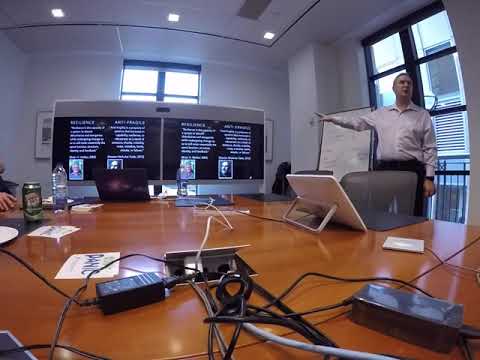
As the pace of change continues to increase, implementing strategy and changing direction is still a major hurdle for most organizations. Companies now need to be able to focus, align and engage their people around dynamic and measurable outcomes – becoming more agile and flexible in their outputs and process while helping people understand how they connect with and impact their companies future success.

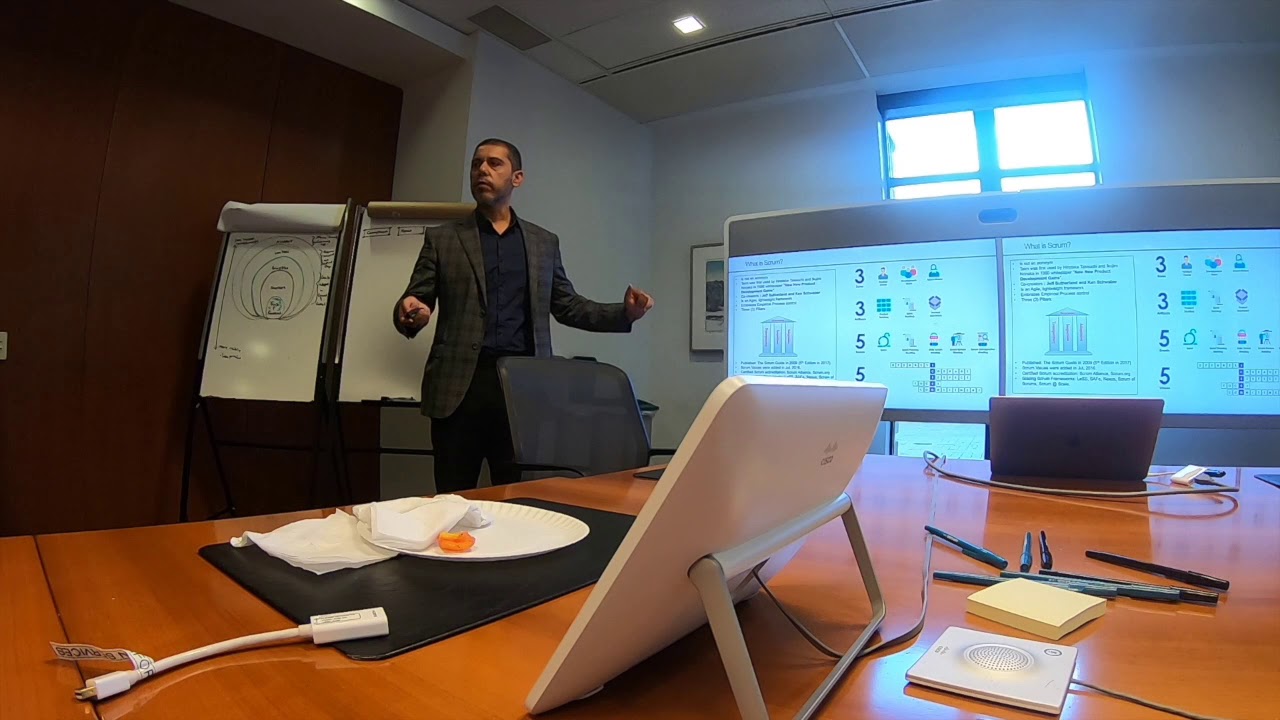
In this session, we will be joined by Carlos Oliveira, a principal adviser at adaptiveX, a boutique product design, training and innovation consultancy.

Carlos will be leading us through Objectives and Key Results, a simple goal setting framework popularized by Google and used by leadership teams across Silicon Valley. Participants will be guided through an interactive exercise to help grasp the concept. Carlos will also share his experience implementing the framework in large enterprise organizations.

https://blog.adaptivex.ca/blog/agile-business-goals

[wonderplugin_pdf src=”https://www.leanagilecan.com/wp-content/uploads/2019/10/Lean-Agile-Network-Carlos.pdf” width=”100%” height=”600px” style=”border:0;”]

[arve url=”https://www.youtube.com/watch?v=HM18UeVYmDE&feature=emb_logo” /]

Bio: Dr. Klaus Leopold is a Kanban pioneer and worldwide one of the most experienced and successful lean and agile experts for knowledge work. He provides consulting for global companies on implementing Flight Levels and Kanban, the change processes associated with these and optimizing their value creation.

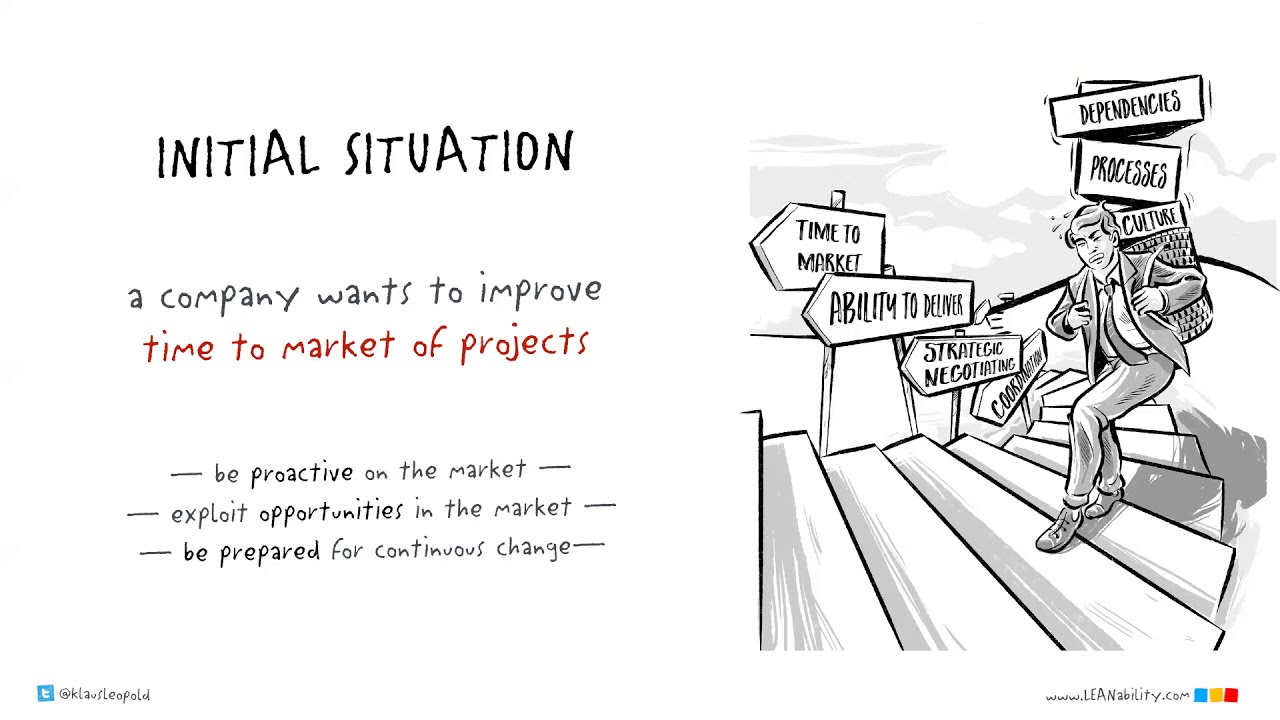
Abstract: In this talk, I discuss an agile transition where approximately 600 people were involved. The goal was to shorten the time-to-market for initiatives to be able to respond to customer needs more quickly and, as such, improve business agility. In order to achieve this, a reorganization was carried out. Cross-functional teams were constructed so knowledge needed for development is fully available within the team. In addition, the teams were categorized according to product in order to remove any dependencies. Visualization of the work, Standup meetings and Retrospectives made the agile transition complete—except for the expected improvements. In this session, I share what we did to improve the situation and reach the goal of “more business agility”. I also show how you can approach an agile transition of this size, so you can avoid the issue of no improvements being seen. This much I can tell you in advance: do not start at the team level—it will save not only your nerves, but also a lot of money!

For a limited time, grab Klaus Leopold’s Practical Kanban book at Leanpub for a discounted price for the LeanAgileCAN Network. You can use the link below, and/or use the coupon LeanAgileCAN when purchasing the book.

https://leanpub.com/practicalkanban/c/LeanAgileCAN

Lean Agile Network (LAN), previously known as Agile Lunch, is bringing you the first-ever series of Agile Emergent Speaker featuring Nawaz Butt.

Please join us for an hour of conversation, discussion and learning with Shahin, Nawaz, and Bola.

Nawaz is going to talk about Scrum Values for the first half.

Then we are going to facilitate an introduction to Liberating Structure. The audience is then going to participate in a Liberating-Structure activity. The outcome will help us to shape the future of Lean Agile Network.

[wonderplugin_pdf src=”https://www.leanagilecan.com/wp-content/uploads/2019/08/Lean-Agile-Network-Nawaz-Shahin-Bola.pdf” width=”100%” height=”600px” style=”border:0;”]

Stress and anxiety are widespread in our industry and you may have already noticed that it’s really hard to coach someone who is highly stressed or anxious. It’s also really hard for you to personally perform at your best when you’re in that state.

In this workshop, you’ll learn (and practice) a collection of specific techniques to immediately release those feelings of stress or anxiety. Techniques include bi-lateral stimulation through movement to rebalance brain activity and several techniques that will lower anxiety by triggering the parasympathetic nervous system: From relaxing the jaw to switching your eyes into peripheral vision. In all cases, we’ll talk about some of the neuroscience and then practice the technique as a group.

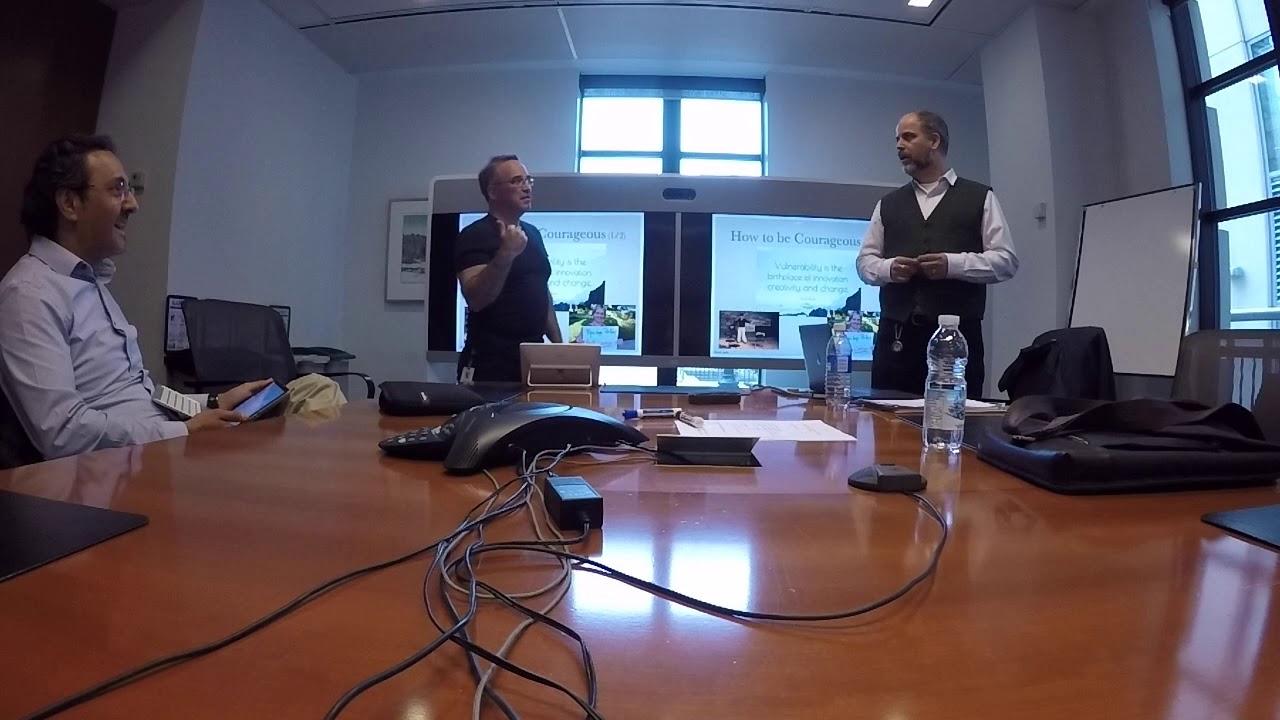
What do Scrum and Extreme Programming have in common? Courage is a requirement for success. Let’s explore what this means to us and our interactions with others; and how it can elevate our performance towards joy and success. Agile begins with values. Let us begin with courage.

[arve url=”https://www.youtube.com/watch?v=F53d0P_eg6c&feature=emb_logo” /]

Abstract:

As seasoned Agilists of all stripes are finding, the biggest challenges with agility revolve not so much around its outer aspects—its processes, practices, deliverables, and business outcomes—but around the sensemaking, communication, and relationship intelligence of an organization’s people: its inner aspects. This is where we find the characteristically human problems of resistance, conflict, communication breakdowns, broken promises, people going through the motions with little passion or conviction, deteriorating product quality, managers micro-managing—the world, that is, of mindset and culture—the world of inner agility.

In this session, we will discover what executive coaching, leadership development, and adult development can teach us about the nature of inner agility, why it is so key to the growth of a vibrant and sustained outer agility, and how we can be deliberate about facilitating its growth.

Speaker’s Bio:

Michael Hamman guides organizational leaders toward greater holistic team and enterprise-level agility, primarily by helping them grow their inner capacity for leadership agility in the face of the complexity, volatility, and ambiguity of 21st-century life and business. Among the first to bring Agile coaching into the corporate environment back in 2004, Michael has coached dozens of Fortune 500 companies, leaders and teams toward greater holistic team and enterprise-level agility. He is author of Evolvagility: Growing an Agile Leadership Culture from the Inside Out and is Co-Founder and Managing Partner of Agile Leadership Institute. He currently lives with his wife, Susanne in Taos, NewMexico.

Thanks for watching the LeanAgileCan Webinar series. We’d also want to thank Michael Hamman for taking the time and talking to us. It was a pleasure having him. I am sharing with you some of the resources mentioned during the session.

Michael’s Book: Evolvagility: Growing an Agile Leadership Culture from the Inside Out
Amazon.ca: https://amzn.to/2tUoyQr
Amazon.com: https://amzn.to/2CbyWaU

Agile Leadership Institute: http://agile-leadership-institute.com/evolvagility/

Sign up for the newsletter (http://www.leanagilecan.com), to get updates for the next webinars and when new educational videos are added.

Learn more about the Personal Elevation Program. (https://to.sheidaei.com/2EGQ2Ot)

The informational material (https://docs.google.com/presentation/d/1CL8K4q7Y1v7Xoz4dUAOVJFO5i9Z7KQjcgDkhKGxBb0o/edit?usp=sharing)  presented today before the main session.
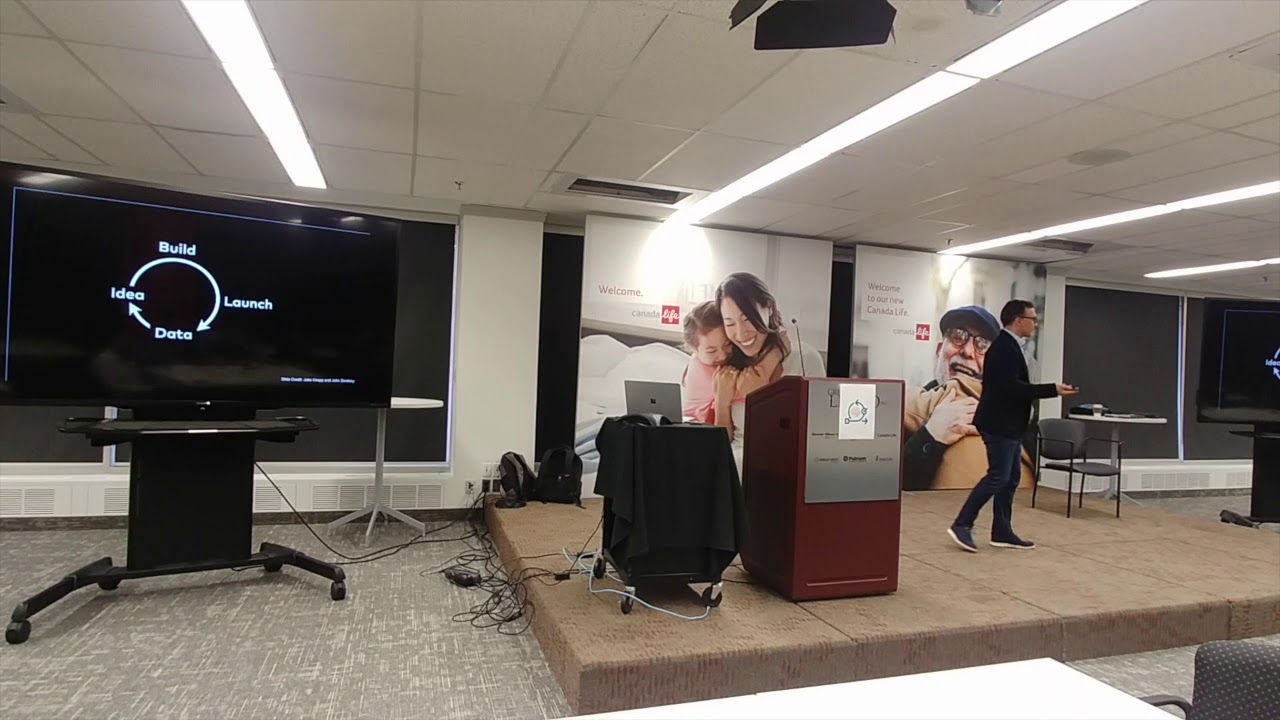
Business agility is more than the organization’s IT shop adopting an agile delivery method. Business agility depends on three core capabilities: rapid delivery, strategic sensing, and customer rapport. As such it builds resilience to change as a strategic imperative and eventually it allows businesses to build a strategic advantage in driving change.

Investments in “agile” from an IT perspective will not increase business agility. So what does a company need in order to successfully drive change rather than react to it?

Dave will talk about how creating a resilient organization starts with rapid delivery and why many major organizations are turning their attention to less costly on-demand releases. We’ll look at how customer rapport is the new driver of operational efficiency, where not building something is invariably cheaper than optimizing the operational cost of building anything at all.

Is conflict the key to a high performing team?

What if I told you without conflict your ability to improve through Agile & Lean will be severely limited. What role does conflict play in developing a high-performance team? When you encounter conflict do you shy away or move towards it?

It is natural to feel anxious around conflict and want to escape it. However, high-performance teams embrace conflict for the sake of improving and growing. In this session, we will explore how conflict is a normal and healthy part of any team environment. We will explore what causes conflict, and how to work with the conflict for the sake of landing in a better place. Believe it or not, you’ll even learn to provoke conflict for the sake of your team’s growth.